
Greenville County Previous Residents by Era
Previous residents are found by matching the question to the period. Greenville County’s Register of Deeds provides a long land-record trail, but deeds document recorded land parties rather than every person connected with an address. County GIS contributes the parcel bridge. Directory volumes, census schedules, maps, probate material, and newspaper indexes add dated evidence about a household or a place. The strongest result preserves the source, date, and legal or street description at every stop.
| Source | Years It Covers | Where Held | What It Shows |
|---|---|---|---|
| ROD grantor/grantee indexes | 1787-present; reconstructed aids for 1785-1789 | ROD current and historical search, office, and SC Room microfilm | Parties, book/page path, legal description, and deed-chain leads |
| GIS history and archived card | Assessment history from 1998; archived card before 2003 | Greenville County GIS Property Report | Listed owners, assessment context, deed references, and parcel leads |
| Greenville city directories | 1883-2008 at the Historical Society | Greenville County Historical Society and selected library runs | Dated name-and-address evidence according to the volume |
| City Block Book and Sanborn maps | Block Book for 1923 and 1924; GCHS Sanborn maps 1920-1951 | South Carolina Room and Greenville County Historical Society | Block, building, and street context for a particular period |
| Federal census | Released decennial years under the 72-year rule | National Archives and authorized genealogy access | Household enumeration at the census date |
| Greenville News obituary index | Index from 1901-present | GCLS online index and South Carolina Room microfilm | Date and page leads for death and family-reference research |
Start with a current address in the property roll when the parcel is known. Start with a dated directory, Block Book, or map when an older address is the only lead. The address may change format across time, so a legal description, plat, lot, block, subdivision, or PIN can keep the Greenville County land parcel in view when a street number cannot.
Greenville County Past Residents Through Deeds
The deed chain is the backbone for past-resident research at one Greenville County address. Begin with Real Property Search, then open the GIS Property Report for the selected parcel. Note the PIN, location or situs, owner mailing address, deed book/page/date, plat book/page, and legal description. Mailing and situs addresses serve different functions, so neither should be treated as a complete household record. The current deed citation is the handoff to the Register of Deeds.
- Identify the present parcel by street, owner, or map number, then save the Greenville County PIN and legal description with the current deed citation.
- Find the current acquisition in the Register of Deeds by party name, book/page, instrument number, or legal description. Read the named parties and recorded date.
- Take the seller from that deed and search for the earlier acquisition in which that seller appears as grantee. Confirm that the legal description or plat still points to the same land.
- Repeat the grantee-to-grantor movement one recorded transfer at a time. Keep the book/page path rather than relying on a modern street number.
- When the record crosses into the earlier hierarchy, use the historical grantor or grantee index, date range, surname initial, index file, and book/page. The ROD does not perform title work, so this is a research method, not legal advice.
- Grantor and grantee
- The grantor is the party conveying an interest in a recorded document. The grantee is the party receiving it. In a backward deed trail, a later seller often becomes the prior grantee to search.
- Chain of title
- The sequence of recorded transfers connected to the same land. It is not a complete account of every person who stayed at that address.
- Legal description
- The lot, block, subdivision, metes-and-bounds, or other recorded land identifier. It is the reliable bridge when an older document lacks a familiar street address.
Greenville County Deed Records Before 1985
Greenville County’s modern and historic paths meet at the Register of Deeds, but they do not use the same workflow. The current guide is organized for post-1985 searching. Earlier research uses the grantor or grantee indexes to reach a book/page citation. The historic record trail is unusually deep: ROD names and indexes reach to 1787, with reconstructed land and deed aids for 1785-1789. Deed images begin in 1787, while image dates for other series differ.
The Register of Deeds landing page is the official starting point for current and historical land records, free public searching, and e-certified ordering.
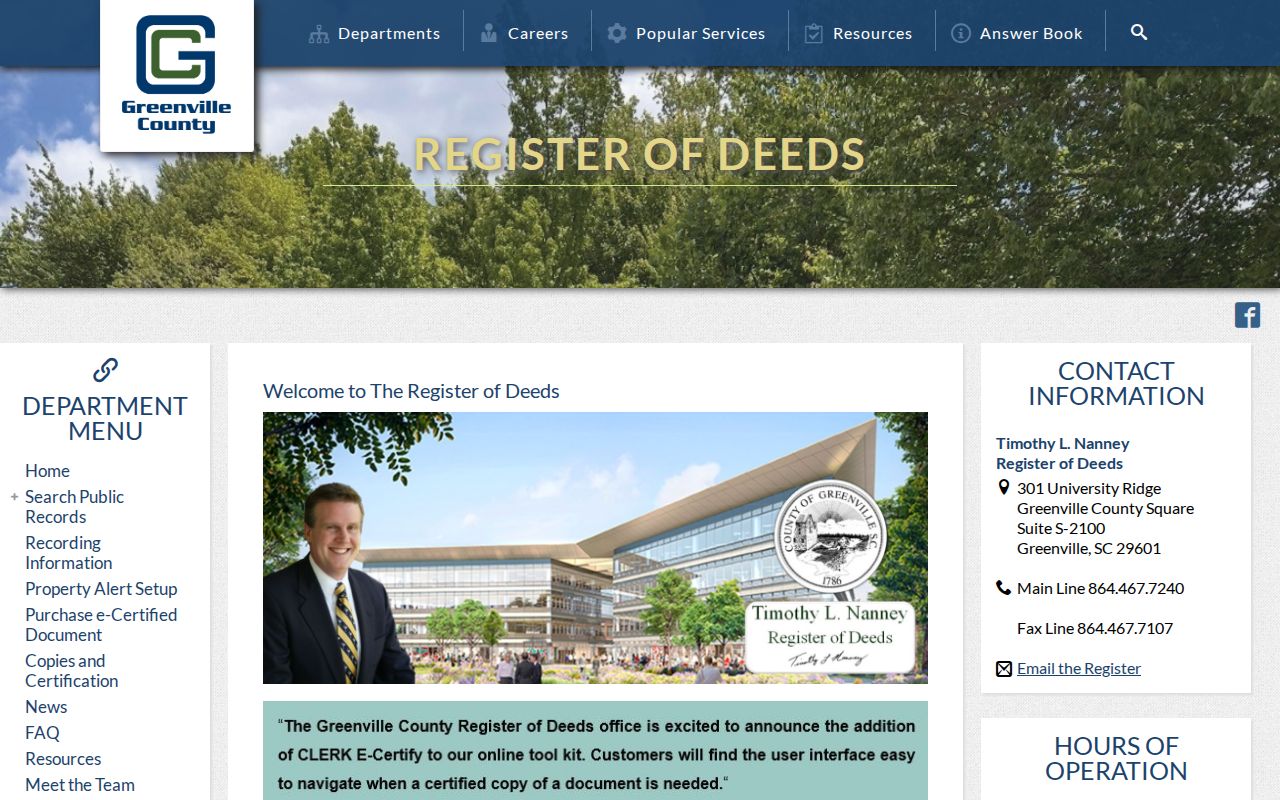
For a copy or an image that cannot be resolved online, ROD offers counter, phone, mail, e-certification, and South Carolina Room microfilm channels. Its published copy options include free online noncertified copies and separate fees for certified or alternate copy routes.
The ROD Land Grant index supplies the earliest local lead for some Greenville County address-history research.
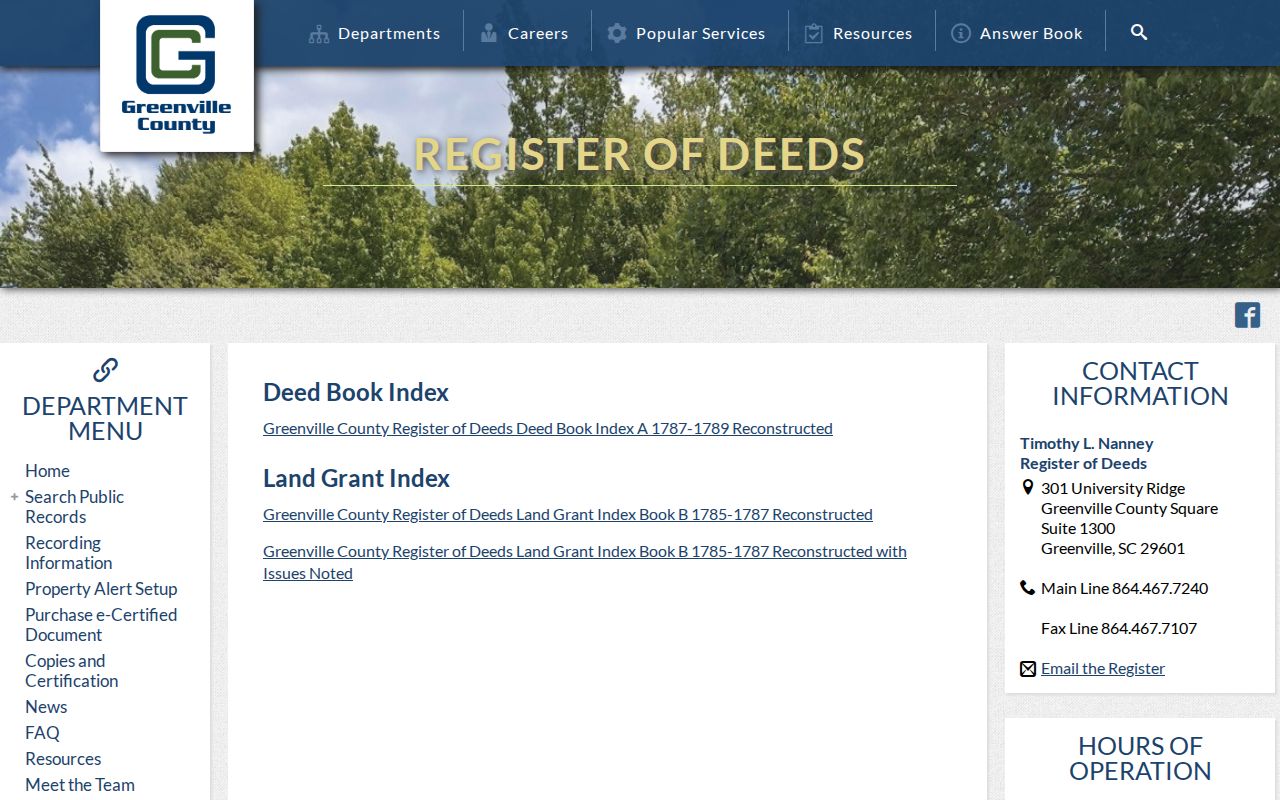
Those reconstructed aids are not a single uniform database for every early record. Preserve the specific index, series, book, and date that produced a result before drawing the next link in the chain.
Greenville County Address Records and Plats
Plats keep a Greenville County address trail from breaking when the street label changes or disappears. A Property Report can point to a plat book/page as well as the deed citation. The recorded plat can establish a lot, block, or subdivision relationship that the current street number does not reveal. When the land is described by metes and bounds, the deed’s legal description becomes the stronger anchor.
The GIS report includes ownership, assessment, deed, plat, and historical leads, but the County states that its map and parcel data are not a title search, survey, appraisal, or zoning verification. Use it to identify the parcel and the citations to retrieve from ROD. A tax classification or owner mailing address can be helpful context, yet neither proves that a full household was present at the parcel in a given year.
Note: An older Greenville County instrument may be easiest to follow by lot, block, subdivision, or legal description rather than its modern street address.
Greenville County Previous Residents in Directories
Deeds identify recorded parties; directories provide the household layer needed to ask who lived here before. The Greenville County Historical Society documents Greenville City Directories from 1883 through 2008, though individual volume availability should be confirmed. The Hughes Main Library catalog also identifies Hill, R.L. Polk, and later directory runs with gaps. Data Axle/InfoUSA reverse or cross-search directories are documented from 2007, and the City Block Book survives for 1923 and 1924.
The County Historical Records collections complement the local shelf with digitized county series that also exist on South Carolina Room microfilm.
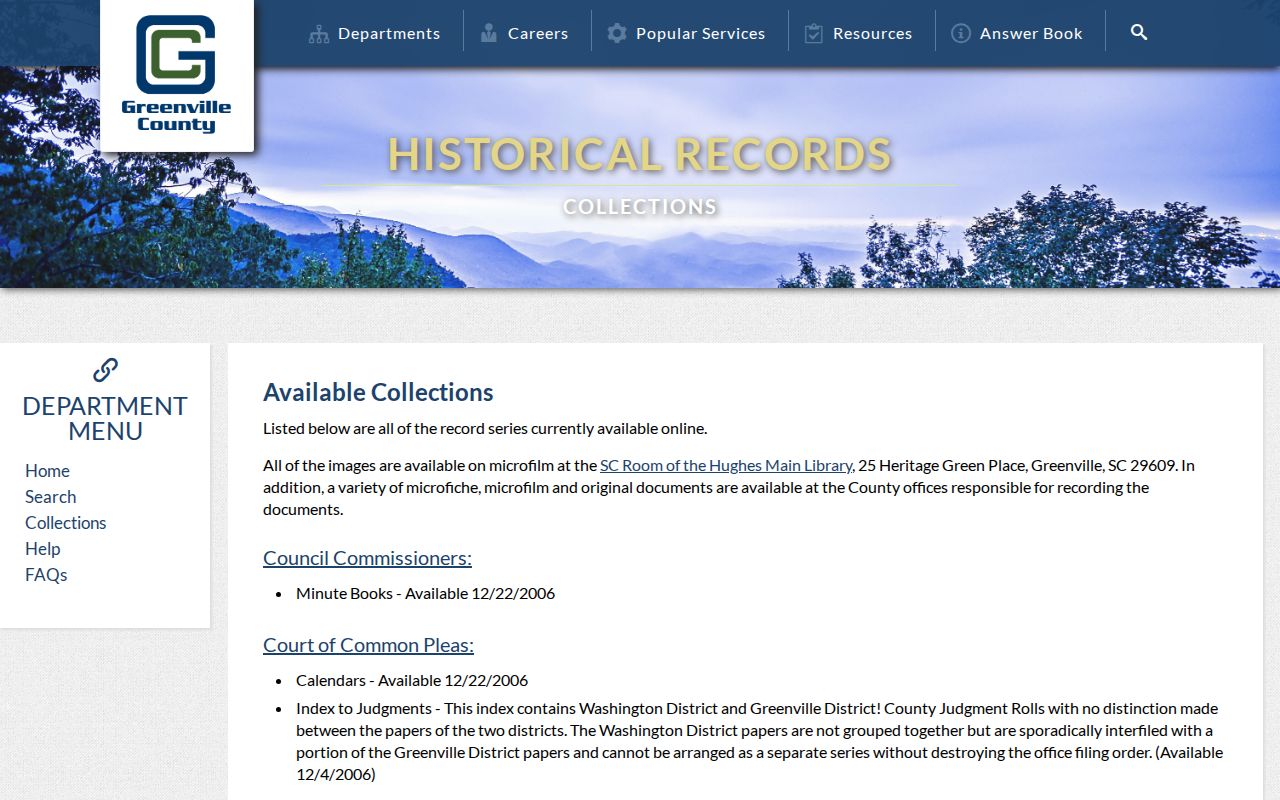
Use an exact directory year and compare the returned address with the property card, recorded deed, and a released census. The historical research did not inspect a local printed reverse-directory page, so a particular volume must be viewed before its layout or labels are described.
Greenville County Past Residents in Census
Pair a directory year with the relevant released federal census rather than treating either record as a permanent address claim. Federal decennial schedules become public under the 72-year rule. The South Carolina Room’s home-history guidance joins directories and the Block Book with property cards, deeds, plats, Sanborn maps, historic land maps, and genealogy resources. The historical collections themselves are detailed on the Greenville County city directory collections page.
- Locate the name and address in one confirmed directory volume or Block Book reference, and record that volume’s year.
- Use the released census closest to that period to evaluate the household at the census date, not as evidence for later years.
- Compare the entry with the parcel’s deed citation, property card, or plat. This distinguishes a land transfer from a dated household reference.
- Move one directory volume backward or forward and repeat the comparison. A name’s absence may reflect a move, an unlisted listing, a changed address format, or another reason that needs evidence.
- Use an obituary index or probate file as a possible endpoint, then confirm the date, party, and relationship in the original record.
Greenville County Address History Maps
Sanborn maps add a physical-place layer to a Greenville County address history. Greenville County Historical Society holdings include City of Greenville Sanborn maps from 1920 through 1951. The South Carolina Room’s home-history guide also points to University of South Carolina digitized Sanborn maps and local microfilm or physical-map access. These maps can place a building, street, or block in its period; they are not a person index.
The County Historical Records FAQ explains that historic documents were first microfilmed and then digitized, with image quality that can vary.
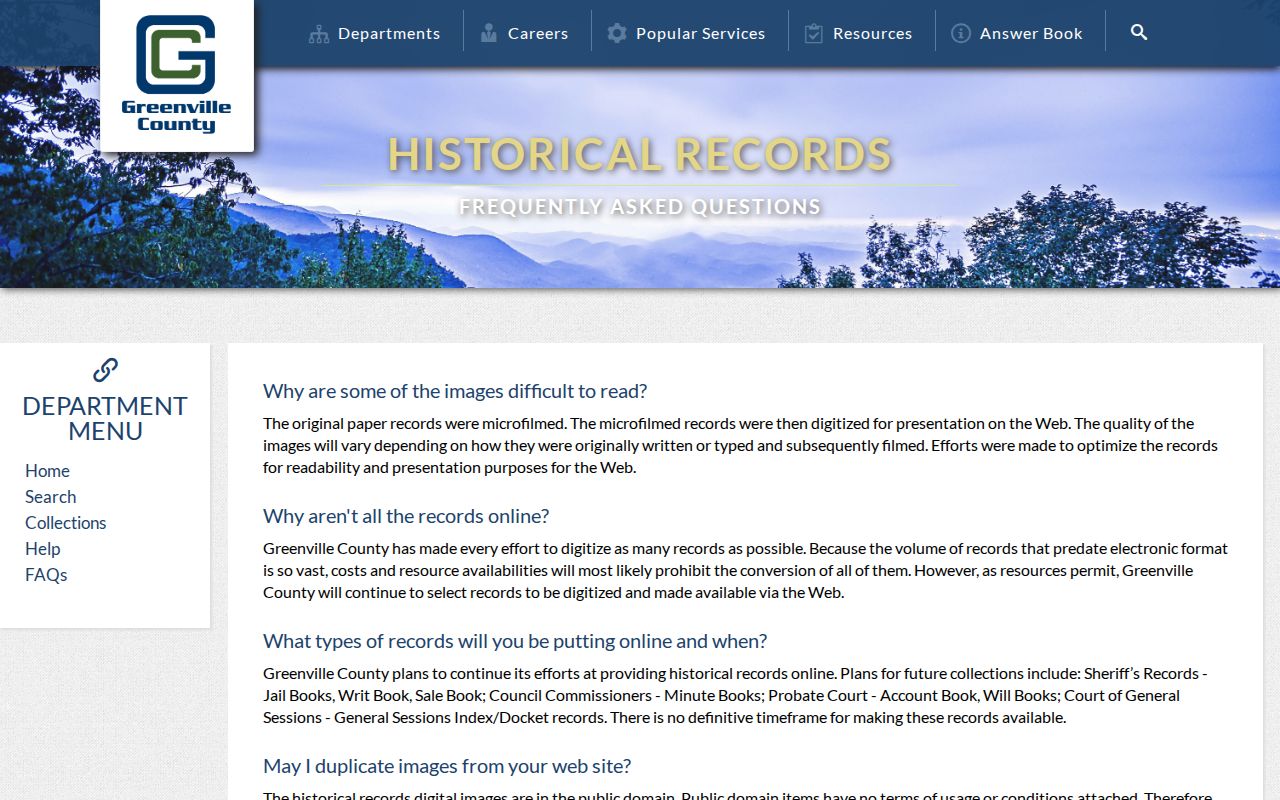
When an image is hard to read or an online series seems incomplete, use the web index as a lead and turn to South Carolina Room microfilm or the original custodian for the underlying source.
Greenville County Early Record Names
Early Greenville County research needs more than one place name. The county was created in 1786, formed part of Washington District with Pendleton from 1791 through 1800, and its county seat was known as Pleasantburg before the 1831 rename to Greenville. Those names can appear in historic catalogues and records. Search the relevant locality label for the period instead of assuming today’s name was used when the record was created.
One local filing quirk makes this especially important. The County Historical Records collection says Washington District and Greenville District Court of Common Pleas judgment-roll papers are sporadically interfiled and cannot be separated without disturbing the original order. Search party name, date, and both locality terms in early material.
South Carolina Archives Online Research adds statewide indexed will transcripts, land grants, court records, military material, historic properties, and catalog access to the Greenville County trail.
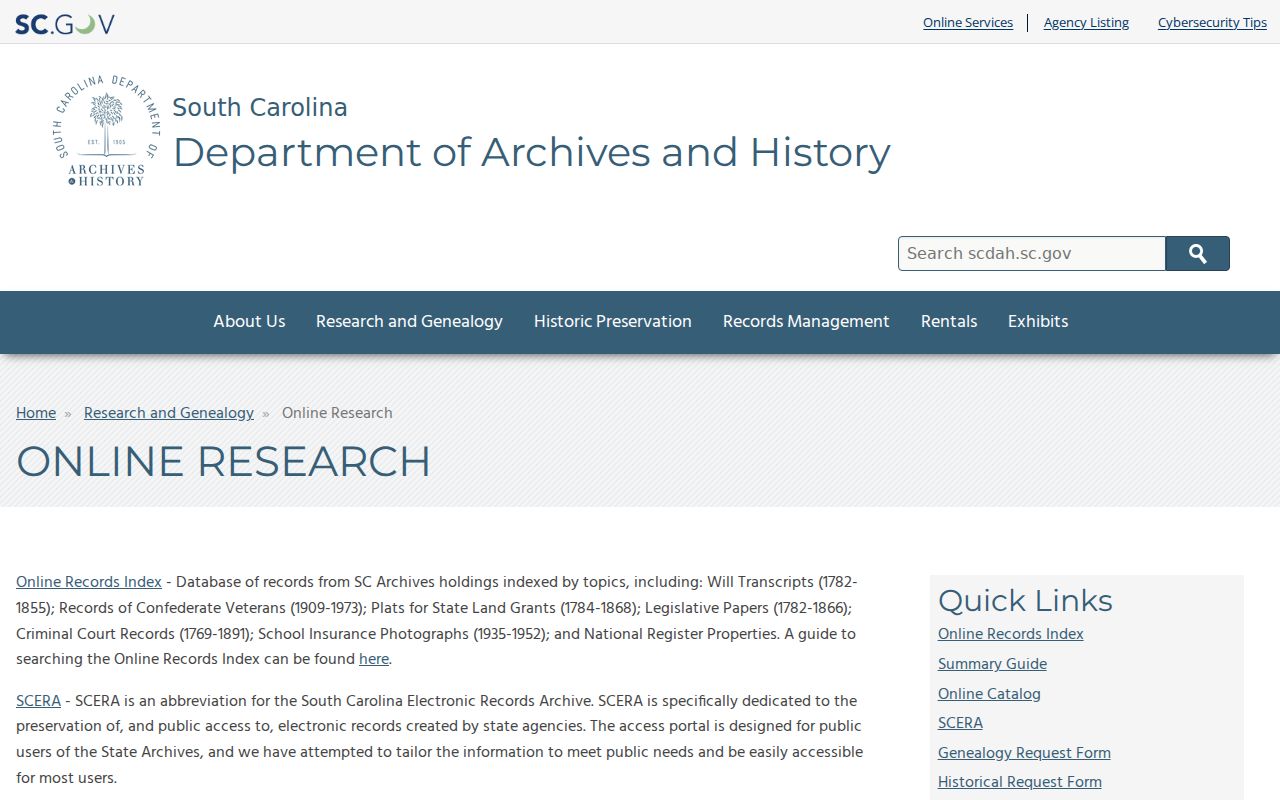
The archive can expand an early address search, but each result should retain its own series and date. County and state materials should not be collapsed into one undifferentiated record set.
Limits on Greenville County Previous-Resident Research
Past residents and recorded owners are not interchangeable. A deed sequence follows land interests. A directory or census can show a dated household reference. A permit, code item, tax event, or map may date activity at the parcel but does not conclusively identify every person there. Greenville County’s eTRAKiT route has public modules, but its direct permit search led to public-account login during the research; use the account, counter, reports, or a precise FOIA request rather than assume a public result is available.
The Greenville News obituary index can lead from a name to a date and page, with the corresponding material available through South Carolina Room microfilm. Probate files can add estate context and possible heirs. The GCLS research-request service can perform defined deed or probate research for a published fee, while the County remains the custodian for original property and recorded-deed material.
Lawful use. Greenville County previous-resident research is for family history, estate questions, house history, civic research, and personal curiosity. Never use a record to stalk, harass, track, threaten, or harm a living person.